Provider eligibility and plan data
Agree the required data, permissions and exception handling for this stage before implementation.

Integrate your chosen insurance provider into the booking journey, with clear handoffs for eligibility, issuance and support.
Discuss your requirements →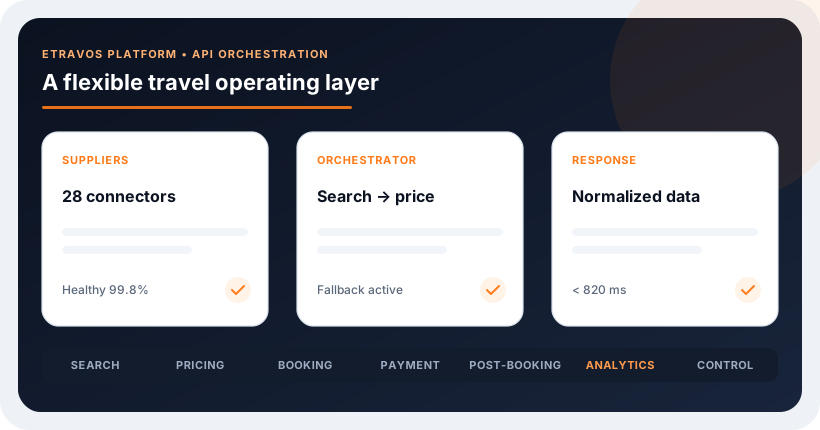
Define the users, inventory sources and commercial rules first. Then connect the customer experience with the work your operations team needs to manage.
Agree the required data, permissions and exception handling for this stage before implementation.
Agree the required data, permissions and exception handling for this stage before implementation.
Agree the required data, permissions and exception handling for this stage before implementation.
Agree the required data, permissions and exception handling for this stage before implementation.
An insurance purchase relies on accurate traveller and trip information, eligible products and confirmed policy issuance. Scope the data exchanged with the authorised provider and make responsibility for product wording explicit. Integration should support the approved sales process, not invent coverage promises.
Integrate your chosen insurance provider into the booking journey, with clear handoffs for eligibility, issuance and support.
Identify supplier accounts, credentials, content ownership and the people responsible for updates.
Test successful transactions, unavailable inventory, price changes, retries and cancellation behaviour against your scope.
Agree reporting, support handoffs and the launch checklist with your operations team.
Test an ineligible traveller, a changed trip date and a paid request with delayed issuance. Decide what is shown to the customer and how the exception reaches the responsible team. Keep the provider reference available for follow-up and reconciliation.
Bring your operations lead and supplier contact into the scope review. For travel insurance, the decisions around eligibility, policy wording, premium calculation and issuance need named owners and clear acceptance criteria.
We will review your platform, supplier interfaces and data requirements to define a suitable integration approach.
The booking model, inventory ownership, supplier capabilities, user roles and post-booking requirements shape the scope. Provider agreements and API access must be confirmed.
No. Product availability, distribution permissions, policy terms and commercial agreements must be confirmed with the insurer or authorised provider. The software workflow should reflect those approved arrangements.
Make eligibility, trip dates, coverage limits, exclusions and the policy wording accessible before payment. Avoid presenting a short marketing summary as a substitute for the insurer’s complete terms.
Track payment and policy issuance separately, retain the provider reference and give operations a clear exception queue. Agree when to retry, escalate, refund and notify the customer with the provider before launch.
Share your requirements and the systems you already use.
Talk to an Expert →Use these guides to review the decisions behind your platform scope.
Explore practical guidance on platforms, integrations and booking operations.
Practical insight for travel businesses building connected digital booking and distribution experiences.
Read article →Practical insight for travel businesses building connected digital booking and distribution experiences.
Read article →Practical insight for travel businesses building connected digital booking and distribution experiences.
Read article →